
Ep 371 From Burnout to Emotional Readiness: Healing the Fertility Journey with Margaret Cali
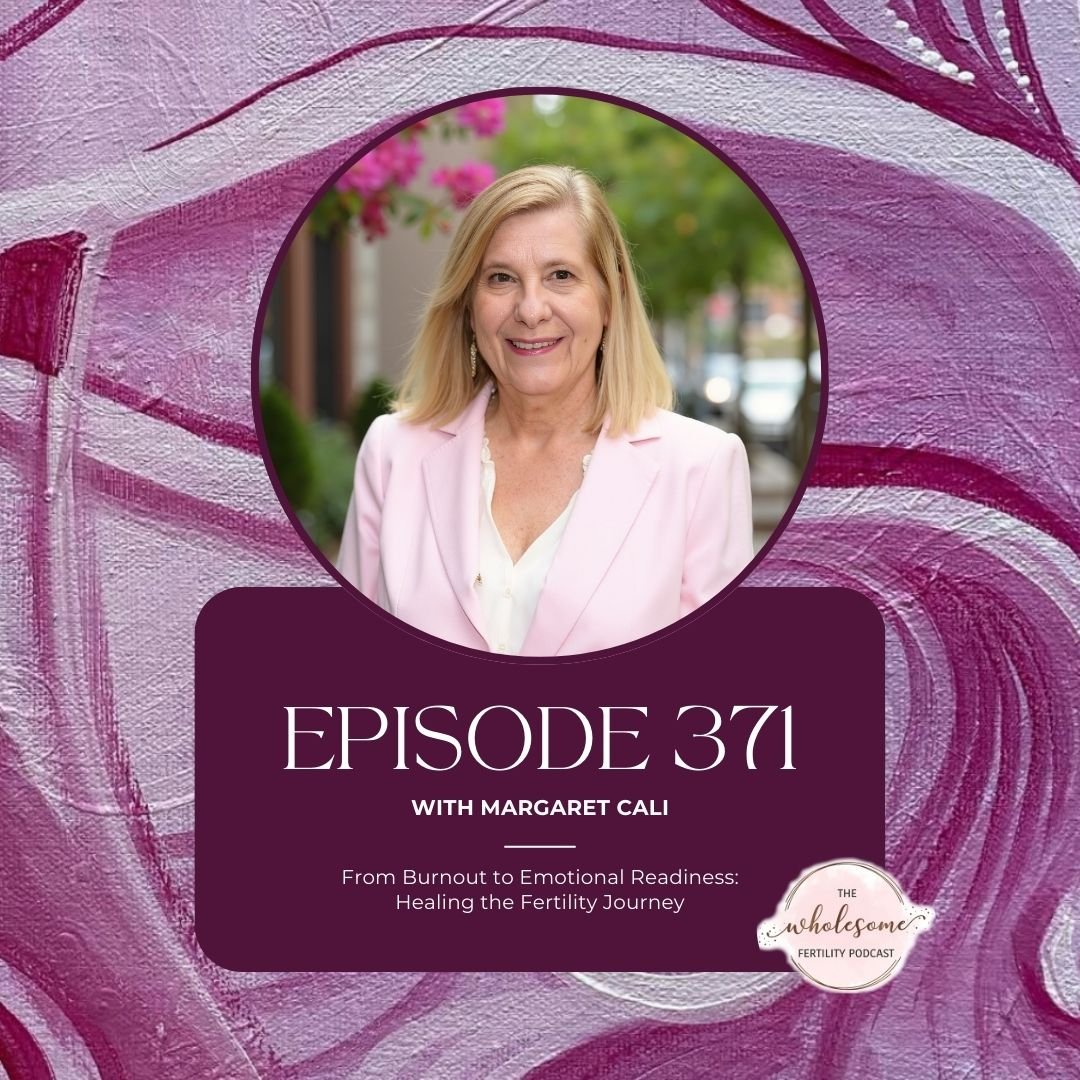
On today’s episode of The Wholesome Fertility Podcast, I’m joined by Margaret Cali, a Fertility and Mindset Coach and founder of Cali Coaching. Margaret shares her deeply personal fertility journey, which began at age 25 and included miscarriage, PCOS, medication complications, emotional burnout, and years of feeling lost and disconnected from herself.
After stepping away from the relentless cycle of trying to conceive and focusing on healing her nervous system, mindset, and emotional wellbeing, Margaret went on to conceive successfully through IVF at age 40. Her story is a powerful reminder that fertility is not just a medical journey, it is an emotional, mental, and whole-body experience.
In this conversation, we explore what burnout during fertility really looks like, why emotional support is so often missing from fertility care, and how rebuilding your inner world can transform not only your fertility journey, but your life. Margaret also shares the tools that helped her heal and introduces her RISE Method, an emotional readiness approach designed to support women at every stage of trying to conceive.
Key Takeaways:
Fertility struggles affect the nervous system, identity, and emotional wellbeing, not just the body
Burnout can block your ability to receive, restore, and reconnect with yourself
Emotional healing is not time wasted, it is foundational to fertility and long-term wellbeing
Small, consistent shifts create powerful transformation over time
You don’t have to carry the emotional weight of fertility alone
Connect with Margaret Cali:
Website: https://www.margaretcali.com.au
Instagram: https://www.instagram.com/margaretcali.au
Facebook: https://www.facebook.com/MCaliCoaching
LinkedIn: https://www.linkedin.com/in/margaret-cali-4bb936188/
TikTok: https://www.tiktok.com/@margaretcali
YouTube: https://www.youtube.com/@margaretcali
Email: mcalicoaching@gmail.com
To apply for Margaret’s program, click here.
Disclaimer: The information shared on this podcast is for educational and informational purposes only and is not intended as medical advice. Please consult with your healthcare provider before making any changes to your health or fertility care.
Ready to discover what your body needs most on your fertility journey?
Take the personalized quiz inside The Wholesome Fertility Journey and get tailored resources to meet you exactly where you are:
https://www.michelleoravitz.com/the-wholesome-fertility-journey
For more about my work and offerings, visit: www.michelleoravitz.com
Curious about ancient wisdom for fertility? Grab my book The Way of Fertility:
https://www.michelleoravitz.com/thewayoffertility
Join the Wholesome Fertility Facebook Group for free resources & community support:
https://www.facebook.com/groups/2149554308396504/
Connect with me on social:
Instagram: @thewholesomelotusfertility
Facebook: The Wholesome Lotus
Disclaimer: Some of the links shared are affiliates but this is at no cost to you and can even get you discounted prices!
-
[00:00:00]
Michelle: Welcome to the podcast, Margaret. I am so excited to have you on.
Margaret: I'm so excited to be here, Michelle. Thank you for inviting me on.
Michelle: Of course. So Margaret is, um, really somebody who I absolutely love and have the pleasure to work with as one of my certification coaches certified, um, the wholesome fertility coach, and she's just one of the most nurturing sweet. Souls, uh, that I had the pleasure to meet. And I would love for you, Margaret, to share your story and how you got into fertility coaching.
Margaret: Thank you, Michelle, and thank you for that warm introduction. Well, my fertility journey is quite a long standing one. I started to try and conceive at 25 and like [00:01:00] everyone else thought it's gonna happen straight away. And it actually did. I fell pregnant straight away, but I miscarried. And then people were saying, oh, it's normal, you know, to miscarry.
Um, but I felt really a lot of pain during that time, like anyone else with a loss, Then I tried to conceive again after a couple of months and I conceive. And you know how you wait a year, you go to the doctors, they say, wait a year. So I waited a year and still nothing happened. So then I went to explore what was happening, and that's when I eventually got diagnosed with PCOS. That also led to the gynecologist giving me medication that led to me, um, getting a growth where I [00:02:00] had to have, um, it removed and it was a huge growth. So basically it was just a cyst.
Michelle: A cyst. Okay. Do you remember what medication was? Um, maybe Clomid.
Margaret: it was climate.
Michelle: Okay.
Margaret: but later on then at that stage, was already depleted, but I, um, decided to go and get a second opinion. Uh, you know, sometimes you have to follow your gut. And I went to get a second opinion and the first thing that the other gynecologist said to me was, have you had your husband checked as well? Oh, my husband was with us. Um, have you been checked and. We said no, being sort of ignorant to the fact that obviously both parties should be checked and then when my husband got checked, he had issues as well.
So that [00:03:00] was, you know, then discovered.
Michelle: Mm-hmm.
Margaret: Basically, um, by that stage. So, you know, it was years that had gone by because I was on ComEd for quite a long time trying to conceive. 'cause the doctor said, I don't know why you're not falling pregnant because you should be. Um, 'cause you didn't see any other issues. And
Michelle: um.
Margaret: I reached a stage where I basically was burnt out. Um, I felt totally, um, by many other factors. Like, um, I was trying to emotionally deal with not falling pregnant 'cause I wanted to be a mother more than anything
Michelle: Mm-hmm.
Margaret: like most of us have. And then obsessed over the fact that I wanted to fall pregnant.
And of course there's all those issues of everyone around you falling pregnant
Michelle: Mm-hmm.[00:04:00]
Margaret: You can't conceive, and so you get into a deep depression as well. basically by this stage also, my husband was trying to deal with was happening. I was trying to deal with what was happening and our relationship. Was having a breakdown as well, because I couldn't communicate with him. He wasn't communicating with me. He felt he was supporting me because not to bring it up and I wasn't talking about it. 'cause I thought by that stage I was to blame. I was the person that caused this, you know, all those feelings of, um, disillusionment and. You know, feeling just totally down.
Michelle: Yeah.
Margaret: that's when um, I met someone, his name was Valentino. He was a [00:05:00] drug and alcohol counselor, and he straightaway identified that I was in that stage of burnout and said, you know, he sort of started to guide me and say to me. You know, you need to take a day at a time.
You need to really, um, your feelings. And so he guided me with all this emotional, um, emotional, um,
Michelle: Support.
Margaret: support, sorry, I couldn't
Michelle: Um, really quick, um, just so people know, like. She didn't go in there for drug and alcohol for herself, just so people hear because, uh, drug and alcohol. Yeah. She went for somebody else and then realized that she needed a little bit more nurturing.
Margaret: yes. I went, um, I went to, um, get some information for a friend and then I found out when I [00:06:00] was there, he sort of picked up
Michelle: Mm-hmm.
Margaret: was. At a level that I shouldn't be, and he just started talking to me just. me some really good tips on how to rebuild myself, and then I realized
Michelle: a guardian angel.
Margaret: this anymore.
So that was really good 'cause that stopped me continuing on this rollercoaster of trying to fall pregnant
Michelle: Yeah.
Margaret: realizing that my nervous system was totally shambles and I was totally burnt out. I couldn't fall pregnant even if I tried, because basically I had to even give up work at the time because I was feeling, physically, mentally, not well.
Michelle: Yeah.
Margaret: basically it was like total burnout.
Michelle: Yeah, I mean, um, sometimes too when you're in [00:07:00] that, it, I, I really, I think that it's just so telling that this whole story of how you met your guide really, and because, because I feel like when you're in that kind of deep, deep, dark place. You're the last person to recognize it on yourself. You, you think that everybody else needs help.
And you went actually to get help for somebody else, not even for yourself. And it's interesting how Valentino was it.
Margaret: Yes, that's correct. Was
Michelle: recognized it in you and you didn't even recognize what you needed at the time for yourself.
Margaret: no.
Michelle: And so this is kind of, I think the key thing that you're saying that I feel like is so important is that.
When people get to that place, because the mindset aspect of it is invisible. It's abstract. It's, I always say it's, it's like the sneaky little thing that nobody even realizes impacts your nervous system, [00:08:00] impacts you on every level, and it's, it's sneaky because you're already in that mindset. Therefore, it's very hard to recognize yourself or to see yourself and see.
Yeah.
Margaret: And I was in, you know, survival mode. I just was like a robot. I would just do the daily things every day, but I. I, I was all also about the guilt. You know, all the
Michelle: Yeah. The shame, the guilt. Yeah.
Margaret: the guilt, um. So I think that like him coming into my life at that time was perfect because I don't know what would've happened if he hadn't. And that made me, he slowly made me realize that I needed to stop this, you know, rollercoaster of trying to fall pregnant just work on myself like. on myself [00:09:00] to reset myself, but to
Michelle: Yeah.
Margaret: rediscover the person I had lost because I had totally lost Margaret. I was a
Michelle: Yeah.
Margaret: that I was, when I started trying to fall pregnant.
I was, I, I, I couldn't even, oh, I don't think I would even recognize myself 'cause I was totally a different person. But on the outside I showed everyone I was fine.
Michelle: Yeah.
Margaret: on the inside I was totally, um, destroyed. Yeah.
Michelle: That's sad. It's sad to hear because you go through life and you're not fully living. You're like walking around, you know, pretending everything's fine, but you're not really truly living.
Margaret: And that's why I feel that if people can tell their stories, then other people can understand that. They're, they're, they're not, they're, uh, you know, it's, it's basically what they're going through [00:10:00] is normal, at the same time, they continue on that path, it's not gonna help them fall pregnant. Because then when I did my, you know, whole holistic, like, like I worked on my mind, my heart, everything, and my body. Went into IVF, then decided to try IVF at the age of 39. I fell pregnant in with my first go, so,
Michelle: Yeah. Amazing.
Margaret: truly believe that was because stopped and really healed.
Michelle: Yeah.
Margaret: Because a lot of women just go from, you know, having, 'cause I had even more, uh, more than one miscarriage. But they keep going until keep going because they feel, they just have, they have, they've lost time. But
Michelle: Yeah.
Margaret: time that you spend [00:11:00] healing and rebuilding your mind, your body, and, and your soul,
Michelle: Yeah.
Margaret: then you will. able to fall pregnant because have healed. if you don't do that, then obviously we know from research that stress plays a big part in also not allowing you, your body to receive a new life. And to be honest, if I had received a new life. The, the depleted Margaret, how could I be a good mother as well, because I was so depleted. How could I give what I needed to give to my child? Whereas having had that time,
Michelle: Mm-hmm.
Margaret: I've enjoyed my motherhood and being able to give my son everything he deserves.[00:12:00]
Michelle: Yeah, and you really touched upon, I like, I love the fact, not love because it's not, it's not necessarily a good thing, but I think the word just is so soothing that you use as burnout, like, because I think that that is really what a lot of people I see, you know, I see every day at work. They're, they're literally coming to me burnt out and they just, uh, and I remember one specific.
Patient of mine saying, you know, I'm not coming here for myself. I'm coming here for the baby. And, and then I immediately recognized, wow, we really need to turn this around. And I had to talk to her about that. And there was a point where she really took a break from everything rebuilt herself. Kind of like how you figured that out.
And I feel like, you know how they say there's, there's steps and stages to, to things like grief. There's stages to a lot of different things in life and I feel like there's also fertility stages. Where you go through that and then you go through trying to, you know, do everything that you could possibly [00:13:00] do to make it work, and then you find yourself burnt out and drained, and then you, you know, somehow, I naturally, people start to realize, okay, well how much, how long can I sustain this?
How long can I go through this in, in the direction that I'm going without having any self care in this? Process and then finally realizing, wow, I really do need to like nurture myself back to healing because I think eventually you, you do realize that I think it is just unsustainable otherwise.
Margaret: Yes, exactly. But I, my, the reason I also like really wanted to become a coach and to make the changes and to give my voice and to also let other people understand that, you know, they're not alone. People understand and there is a way to, you know, go through this process feeling calm and confident, [00:14:00] and know that you have, you know, um, yourself fully. You know, in tune with your body, your soul, your mind, your heart,
Michelle: Yeah.
Margaret: was because I realized there was such a gap.
Michelle: Yeah.
Margaret: that's why I wanna get my voice out there too, because, you know, um, going through fertility is not just medical. emotional
Michelle: Yeah,
Margaret: enough support in the emotional part,
Michelle: you're right.
Margaret: really passionate about that because I, you know, even people that I, I speak to that are, you know, embryologists. even realize there's a gap. And
Michelle: Yeah.
Margaret: a gap, but they, you know, the medical doctors and everything do a great job,
Michelle: Yeah.
Margaret: this massive gap and we need to also educate others about, you know, people that ha are going through fertility to [00:15:00] understand, you know, it's been linked to like going through a divorce or a death.
Michelle: Mm-hmm. And even cancer. Cancer diagnosis. Yeah.
Margaret: we need to put that in, you know, the same care as
Michelle: Mm-hmm.
Margaret: things that we put in the care, you know, and that's my mission, is to get that message out there that we really need to support people that are going through fertility with emotional support That's so important.
Michelle: Yeah.
Margaret: just medical, it's emotional as well.
Michelle: It really is, and you have a very, uh, you just have a knack for it. You, you're very nurturing by nature and you have that ability, and I think that that's not something that you can really teach anybody. I think that's some something that people have innately. Is, uh, having that compassion, having that understanding, and I think that that is something that is very much needed is people just wanna be heard, they wanna be seen, they wanna be [00:16:00] validated.
They wanna feel like they can really rely on somebody that understands them. It's very hard because a lot of times in the communities, they don't feel. Understood, because they see, just like you said, people around them getting pregnant. So people don't really fully understand what they're going through, and many times they're going through it in secret and don't really feel comfortable telling people what's going on.
So it could be very isolating time. A person's life. And so going back actually to your journey, I'd love to hear what was it specifically, or what were some of the things that you did that you really felt brought you back to life or brought you back to a place of grounding?
Margaret: Yes. So basically, um, I did a lot of reading and discovered the, the importance of the mind
and your mindset [00:17:00] and how you have to change your deep feelings to understand yourself. So re like resetting yourself as well and understanding yourself. And going back, I found. To me, like, it doesn't mean everyone's got different ways, but I started journaling and that was a real, um, it gave me a lot of peace, like journaling, being
Michelle: Yeah.
Margaret: my feelings and just putting everything down, even if it's, you know, 'cause I mean. If things are happening, like it could even be a best friend that said something to you that's really upset you your family as well. 'cause it's cultural as well. Like some families just are pushing, you know, um, telling you things like relax and, and, and things that are not working for you. So journaling was really good. I [00:18:00] also, um, found that, um. Things like obviously talking to Valentino that understood. Um, so sometimes you need someone that knows the space, even though he wasn't in the fertility space, he understood how to help people going through trauma. Or going through something. So being able to speak to someone and he taught me that you express your feelings, you say what you feel, you don't leave it inside your body, you actually are able to talk about it.
So that was good, like being able to express your feelings openly
Michelle: Yeah.
Margaret: and breath work as well. 'cause the breathing really helps as well.
Michelle: Mm-hmm.
Margaret: Those, those things really started to help. But also the knowledge of, you know, um, the mindset was, um, [00:19:00] like I read a lot of Louise Hayes and Dr. Wayne Dwyer, I just really related to it and it was like they were speaking to me like they understood me finally.
'cause um, even though I had a lot of love and support around me. I couldn't make the connections. I couldn't get that support. I felt totally alone like
Michelle: Yeah.
Margaret: feel alone. So being able to not feel that feeling alone.
Michelle: Mm-hmm.
Margaret: Is a big thing to releasing. So being able to release all those fears, release all those negative energies and turn them into something po positive. The other thing that I think really helped was the gratitude.
Michelle: Yes,
Margaret: Like being
Michelle: there is science behind it actually.
Margaret: yeah. Write down what I'm grateful [00:20:00] for. Um, and also turning around. Not just seeing my life as just having a baby, but seeing my life as who I am, my
Michelle: Hmm.
Margaret: what I valued,
Michelle: Yeah.
Margaret: able to put that back into my life because you get so obsessed with trying to have a baby that you don't worry about anything about yourself.
Michelle: Yep.
Margaret: you actually lose yourself. So being able to then put back
Michelle: Yeah.
Margaret: the things that light me up? What are the things that make me happy? And then start to implement those things little by little. It's not big changes, it was just slow progressive changes. And then I started to shift.
Michelle: Yep.
Margaret: to shift my mindset, my ideas, my thoughts. It didn't mean I didn't want a baby, and it didn't mean I wouldn't [00:21:00] have a baby. It just meant that I needed to be who I'm supposed to be to bring that baby in. that's basically the major shift. the kind of, and like I said, step by step and Valentine, you say one day at a time, and I
Michelle: Yeah, it's true.
Margaret: a time. just do a little shift every day. So even if it was like. I was, um, getting down and, and probably eating the wrong foods, if it wasn't just changing my whole diet. It might've been just implementing one thing every day to change. my food to make me feel better, to give me more energy.
'cause I didn't have energy as well. So
Michelle: Yeah.
Margaret: kind of things. So I think it's very, um, personalized. So I think everyone has to find [00:22:00] their core reasons as well, their core values, and then build from that.
Michelle: Mm-hmm.
Margaret: your basically awakening. Everything that has died. I
Michelle: Yeah.
Margaret: really, but you are actually seeing like your identity, who are you and what are you wanting out of your life, you know, and focusing then back to yourself.
So filling your cup
Michelle: Mm-hmm.
Margaret: it's. So
Michelle: 100%.
Margaret: filling your cup and then loving and nourishing yourself by doing like the breath work, the journaling, um, the emotional release, whatever ways that helps like. I found walking. That was for me, I found walking the sunlight and I used to love going to the beach and just listening to the waves.
Just those little things. Just, um, personalizing it for you [00:23:00] to put joy back into your life. Yeah. That kind of thing. And also yourself time for compassion, like. am I treating myself this way and a lot of rest? I, and then when those things happen that I was doing slowly, I could rest because I was always awake and, and, you know, why?
Why aren't I falling pregnant? And all those? And self-sabotaging yourself all the time and then changing your words was another one. So instead of, you know, like reframing, so instead of saying, I'm useless, I'm hopeless. You know, changing those words that you say to yourself that destroy the, destroys you as a person, basically. I think those things were the main things initially that I started doing, [00:24:00] and as I grew in more understanding. was like, it was like a, a wheel that turned and I just added more and more and I built myself up to the level that I felt good again. You know, and I had joy in my life and I could, you know, contribute to life. Whereas before it was just surviving life. That was a survival mode that I
Michelle: So interesting how you say that, because I always talk about it. I mean, really like. How our nervous system functions. It goes, it's kind of like a, it teeters between survival or, you know, look the sympathetic, which is con considered the fight or flight. It's not always just fight or flight. It could be very alert and it's part of what, what we need, you know, it's part of, it's a very necessary aspect of ourselves.
Um, it's what gets [00:25:00] stimulated when you're driving and when you're up, when you're focused. It's a hyper focus, but the big thing is that it needs to shift from that to the rest and digest the parasympathetic. It almost sounds like, um, kind of like we're putting a judgment on it, like a fight or flight, but it could be sympathetic.
It could be also very focused if it's done correctly. If it's done in a way that's balanced. And then the rest and digest is us being able to let go and kind of move away from this hyper focus of whatever's in front of us and allow us to get into a state where we're able to digest. And it, it's more of a growth aspect.
And what you were saying really reflects that. It, it's where we can create the body becomes more creative, more easy, more flowy, more um. Imaginative. We go into the kind of like more space and we allow ourselves to, in a sense, kind of float, you know, and be held. And so there's that [00:26:00] doing versus receiving aspect of ourselves.
And like I said, there's not, like, one is bad, one is good. You know, we, we tend to shift from one or the other. However, when we get to. Set on one or too much in one state. And most of us, when we're going through very stressful times in our lives, can find ourselves in a survival mode. And when we're in this constant perpetual survival mode, it will deplete, it will zap your energy.
And as we know, excels, um, sperm cells. Mitochondria is really important. The mitochondria is the really the powerhouse of the cells. And the reason why egg cells, for example, have so much mitochondria compared hundreds of thousands more compared to regular cells in the body. It it, there's a reason nature doesn't make mistakes.
It doesn't just randomly do things. It does it so that it sets it up [00:27:00] for the energy it takes to create new life. And if your energy is being zapped from all over the place. How in the world is it gonna be able to create new life? And it doesn't take a rocket scientist to know. If you're zapped, you could feel it.
Your body's so intelligent, it speaks to you all the time. You feel drained because your body just wants you to sleep, your body wants you to rest so that it can recharge. And that's, uh, you know, it's like our phone battery. It's the same thing. I mean, we see it like it just doesn't function optimally if it's on a low percentage.
Margaret: Yeah, definitely, definitely. And if you're not calm, like how can you, you know, receive the, you know, the new life that you want in your body? So it's all about like being able to shift it from, you know,
Michelle: Yeah, it's a restoration.
Margaret: the restoration part and being able to receive. Yeah, I
Michelle: Yeah.
Margaret: agree in [00:28:00] what you're
Michelle: And I think that what you said was really important. You said one day at a time. It's less overwhelming that way, and I think that that's the key thing. You know, I feel like a lot of people go through, they almost feel pressured to relax. That's like an extra pressure that people feel like, oh my God, now I have to figure out a way to relax.
And I have to, so it's kind of all these extra pressures that people feel. Even something, it's like counterproductive because it's kind of like, how can I relax if I feel pressured to relax? It's just all of these, and then the, you know, there, there's the judgment, you know, oh, you could just relax and you're gonna be fine.
And, you know, the judgment, the, the feeling misunderstood. And it's, but it's true. People say it a lot. It just, uh, it doesn't get, it just keeps happening, you know? So. So those are the things that people feel like, well, how do I do that? And I think that you saying that and kind of naming that like one day at a time feels so much less [00:29:00] overwhelming than to think about all of it at once.
Margaret: Yes, exactly. And you know, thing that we're trying to change is that women shouldn't have to carry this emotional load alone. They should be able to get support so that they can do one day at a time. You
Michelle: Mm-hmm. Yeah.
Margaret: you know, fertility is a whole person journey. It's the body, the mind, the heart, the nervous system, all of that. And when women understand how they can, you know, provide the, the care needed for. For your body, your mind, your heart, and your nervous system, they're naturally gonna feel calmer. They're
Michelle: Yeah.
Margaret: going to be able to deal with things that happen in a
Michelle: Right.
Margaret: way than they would've if they didn't have those tools and strategies.
Michelle: Yeah.
Margaret: about having those tools and [00:30:00] strategies, you know, in your toolkit that
Michelle: Yep.
Margaret: just pop out when you need. And it's just like, even the breath, like just doing that simple breath.
Michelle: Yeah,
Margaret: can just calm you. Like,
Michelle: it's true. It's an immediate hack. It's the best brain hack ever. Um, that will, that is your, your light switch to shift your nervous system right there then and there is your breath.
Margaret: And just having those in, you know, being able to use them when needed,
Michelle: Mm-hmm. Mm-hmm.
Margaret: use different tools because we're all. And you know, some people might like to visualize or meditate, which are also great tools, but obviously each person will find the tools that will really help them through this journey.
Michelle: What would've, what would it have meant to you to find a fertility coach on [00:31:00] your journey?
Margaret: Oh my goodness.
Michelle: Looking back, because back then, I don't know if they, it's more of a recent thing.
Margaret: They didn't have, um, I was just blessed that I met Valentino because he had tools and strategies that he gave me, but. I must admit, even though I went through the process, and of course it took me so long before I, you know, restored myself, I think if I had a fertility coach, it wouldn't have taken me four or five years to do that.
I think I would've been able to do that. Um. Quicker, but also being able to have someone that totally knew, could see me and understand me, knew my
Michelle: Yeah.
Margaret: because had been through it or
Michelle: Yeah.
Margaret: you know, the processes and everything. And I also think by having that fertility coach, like. [00:32:00] I know that I would've been able to go, like I said, go through the process a lot quicker and that's why I wanted, I wanted to become a fertility coach and left education to do that because I knew that you can have these tools and strategies and really it can change your life. It changed mine. It changed mine, and I'm so grateful that had met Valentino. But I know now that if I was going through, you know, fertility issues, I, that would be the first thing I would get is a, coach to help me, um, guide me and give me these tools to get through, um, the journey in a peaceful and calm way,
Michelle: Yeah.
Margaret: Because everyone's journey is different. It doesn't mean that you have to go [00:33:00] through it bump by bump, by bump, bump. You know, you
Michelle: Yeah.
Margaret: like go through it smoothly.
Michelle: Yes, it's true. It, it is true. And everybody's different. Every journey is different. Um, completely. And everybody has, even though there's similar, um, things that people can relate to there, it's such an individual, uh, path. It's an individual way of seeing things, individual perspective, a hundred percent.
Margaret: And I also feel that, like I didn't realize the holistic part of it. So thank you for doing your course, Michelle. 'cause that was just fabulous. I, it just spoke to me because of my journey and when I was doing your course, I'm going, oh my goodness, this is exactly what I need. You know, this is exactly what's going to be able to help me to help others.
It was just really aligned to my beliefs
Michelle: Yeah.
Margaret: and. [00:34:00] My beliefs came from going through that journey, so you know, I would vouch for it. A hundred percent. And also really knowing that the holistic part is about looking after your whole self, not just thinking, oh, I just have to, you know, um, do this part. It's about really deep work, like it's
Michelle: Yes, a hundred percent.
Margaret: your heart, and, and just learning more things about how everything is connected.
Michelle: Mm-hmm. Everything's connected and this is why, um, you know, Chinese medicine really looks at the person as a whole. They don't, uh, look at parts or just symptoms or, you know, it's, it's really mind, body, spirit. Uh, it's all of it's important. Nothing is not important. So it's, even if you're very spiritual, but you're eating junk food or if you're eating really perfectly felt healthy, but you're really hard on [00:35:00] yourself.
So it's kind of like addressing all of those different aspects. And believe it or not, I have a lot of people in the doing the course that are actively on their fertility journey, helping themselves and others at the same time, which is pretty amazing, really amazing that they're, you know. To do that when you're going through it yourself?
Yeah,
Margaret: And I agree because your course covers, you know, the holistic side of it and some co like, uh, you know, some courses just look at. Fertility in general medical, but again, that's not what I was,
Michelle: yeah, yeah. The whole, yeah.
Margaret: it is, not just, you know, to know what, you know, what medication to take, or if you've got PCOS, you should be doing this.
You know,
Michelle: Yeah.
Margaret: each condition it has got different, it's yes. knowledge is important of course, 'cause it changes what you do and [00:36:00] how you are gonna feel, but it's not just that. So I
Michelle: And it's also, uh, you, it's you, Margaret as, as your individual because, um, how you are taking it, how you're translating it, and how you're passionate about it, because that's something that a person can't really be taught. It's a, that, that passion that comes through you, that wants to help others, that to help them on things that you've been through.
To alleviate some of the difficulties and some of, you know, the extra, uh, weight they're carrying, you know? So that is a hundred percent you and I I wanna say that because that is something that you have and you, what I love about wor like the time that I've had working with you, and you are just a really genuinely.
Such great hearted person. I, you don't meet a lot of people like that, that are genuinely like wanting to help people like, like a really, [00:37:00] really authentically,
Margaret: Oh, thank you, Michelle. That means a lot to me. You, um, I, I mean, I, if I can even change one person's pathway make it smoother and calmer, it's, um, it definitely is. Um, what I, you know, would like to do is to help other people. 'cause I really feel that if. I've got a motto is embrace the journey.
Michelle: Mm-hmm.
Margaret: know, embrace it, transform with purpose and the purpose part that you are using the tools and strategies and empower your future by doing that. 'cause I feel that, um, through what I went through, basically that pathway was what I. know, I felt at the end I did, and I [00:38:00] felt like that it did empower my future, um, for the positive, um, ways, you know, that's why I want to, you know, um, and that's why I worked on really coming up with a program that could do that, like. Holistically.
Michelle: Mm-hmm. Talk about the fertility godmother, how you stepped into that role.
Margaret: so, um, obviously I don't want people to spend five years trying and that's not necessary anymore because we do have the tools and strategies. So I've, um, done a holistic program that, um. Aligns your mind, body, and heart and soul. And it's basically, um, the purpose of it is to give you [00:39:00] emotional steadiness for your body trust and inner safety. Um, so whether you are, know, feeling that you, it's good if someone's gotta go through treatment like IVF to do this beforehand, or if someone feels that really they're at, you know, they're feeling, a little burnt out or. Feeling that they're going down that rabbit hole. So what I do there is, um, I do two weeks where we awaken.
So we listen to the story, we look at the values, we look at the person's identity. We also do the cycle awareness so that their understanding their bodies more, so they're really awakening to their emotional patterns. Any burnout. they might have. So basically, it's really important for people to be aware about what's happening to their [00:40:00] bodies and their minds, so that that's the first two weeks. Then the next two weeks is Love and Nourish. So what we do is we do breath work, we do We look at other, uh, strategies that they might put into place slowly into their, their routines to help them steady their, um, look at rest. Compassion and we also look at nervous system rituals, so to help them
Michelle: Love that.
Margaret: system, which is really important. Then week five, we do mindset. 'cause we mindset changing the mindset is really important. We do belief work and we also do visualizations. If obviously the program is. Structured to suit the individual person.
Michelle: So this is all one-on-one.
Margaret: Yeah, it's [00:41:00] all one-on-one and that's important because it has to fit with, you know, their belief systems, what they feel will help them. Then in week six we do grounding, so we do like stress triggers regulation, and we really look at the support because I feel. That the support system they have around them. So especially like partner work and things like that is really vitally important. And I know it's important because of how my marriage broken and had to go through repair like before, you know, during that time.
And that's also why it took such a long time before I went through IVF as well because everything was broken.
Michelle: Yeah.
Margaret: we don't wanna get to that stage. We want to make sure that we have those support systems that we are communicating in a way [00:42:00] that is supportive with your partner or whoever that might be, or a friend, whoever the support system is. Then we do, um, week seven, we do like nurture. So we look at, um, boundaries as well. So not just relationships. So
Michelle: important.
Margaret: boundaries are really, really important because we need to put those in place
Michelle: Mm-hmm.
Margaret: because sometimes, um, people can't understand. So you've gotta put those boundaries
Michelle: Yeah.
Margaret: we can, we do align, we do alignment plan.
Michelle: Mm-hmm.
Margaret: we do like a future vision as well. And the alignment plan is individualized for that person
Michelle: Mm-hmm. Amazing.
Margaret: by that, by week eight, they've already got like a flow through of what they're doing and they see the shifts.
Michelle: Yes, the transformation
Margaret: along [00:43:00] the way. So that's
Michelle: and I have to say she's pretty much giving this away for way under. It's, I mean, this is an incredible opportunity for whoever's listening because, um, if you wanna take it from there and, and tell them this and insane opportunity that people can.
Margaret: Hmm. Yes. So I basically wanna offer it to a, a select number of people, obviously, that I can cater for. 'cause it is a one-to-one program and I'm offering it for $200. Um, because I, obviously it, I'm.
Michelle: So this is eight one-on-one calls. By the way, you guys, it's, it's insane amount of information.
Margaret: they also have like, um, people are wanna do it as the program should be. So it's eight, like the first week and the last week is [00:44:00] more than an hour.
Michelle: Mm-hmm.
Margaret: Um, because. The first week we are discovering and talking and working out what the person, how they want to go along with the program. So that's. Um, probably an hour and a half. And the last week, because we are doing an alignment plan, would be an hour and a half to two hours. then the other weeks it's an hour one-on-one coaching and also they get a journal, so there's a journal to that they can use alongside the program. And at the end we build things as well that they get something at the end that they can go away with, which is not just the alignment plan, but also something built in that will support whatever journey they go on we do the eight weeks program, if you know they have questions or they wanna reach out, [00:45:00] um, we also have that possibility of. You know, um, asking questions or being able to, so it's not just one-on-one, but I want it to be like they feel supported all the way through the eight weeks.
Michelle: Such an incredible gift. Amazing. And I'm going to be putting in an application in the episode notes for anybody who wants to apply. Um, I highly recommend you take advantage of this 'cause I don't know that like anything like this is out, available out there.
Margaret: Thank you. Thank you, Michelle. Um. I, I totally believe in the program and I really believe that someone starting the program wherever they're at, at, in their fertility journey, are gonna come out feeling stronger, feeling more calm, feeling they have strategies and tools to move forward. also feeling that, um. You know, [00:46:00] a different mindset in how they're gonna approach that. They also will have, you know, uh, like skills for partner relationships and also boundaries. So that's, I think, really important as well. yes, um,
Michelle: Amazing Margaret.
Margaret: to have, you know, anyone on board so that I can make those changes for them.
Michelle: Amazing. Amazing, amazing. So, Margaret, I am so excited we finally got you on here, and I just really like, I, I really adore you. You're just such a sweet person. I'm so happy I met you and I'm so happy to finally have you on the podcast. So thank you so much, Margaret, for coming on today.
Margaret: Thank you, Michelle. Honestly, from the sincerely from the bottom of my heart, thank you for allowing me to get this message across to your listeners and [00:47:00] um, I absolutely adore you too, as you know.
Michelle: Awesome. Thank you so much.