Ep 374 The Truth About PCOS: Symptoms, Fertility Struggles, and Finding Real Support
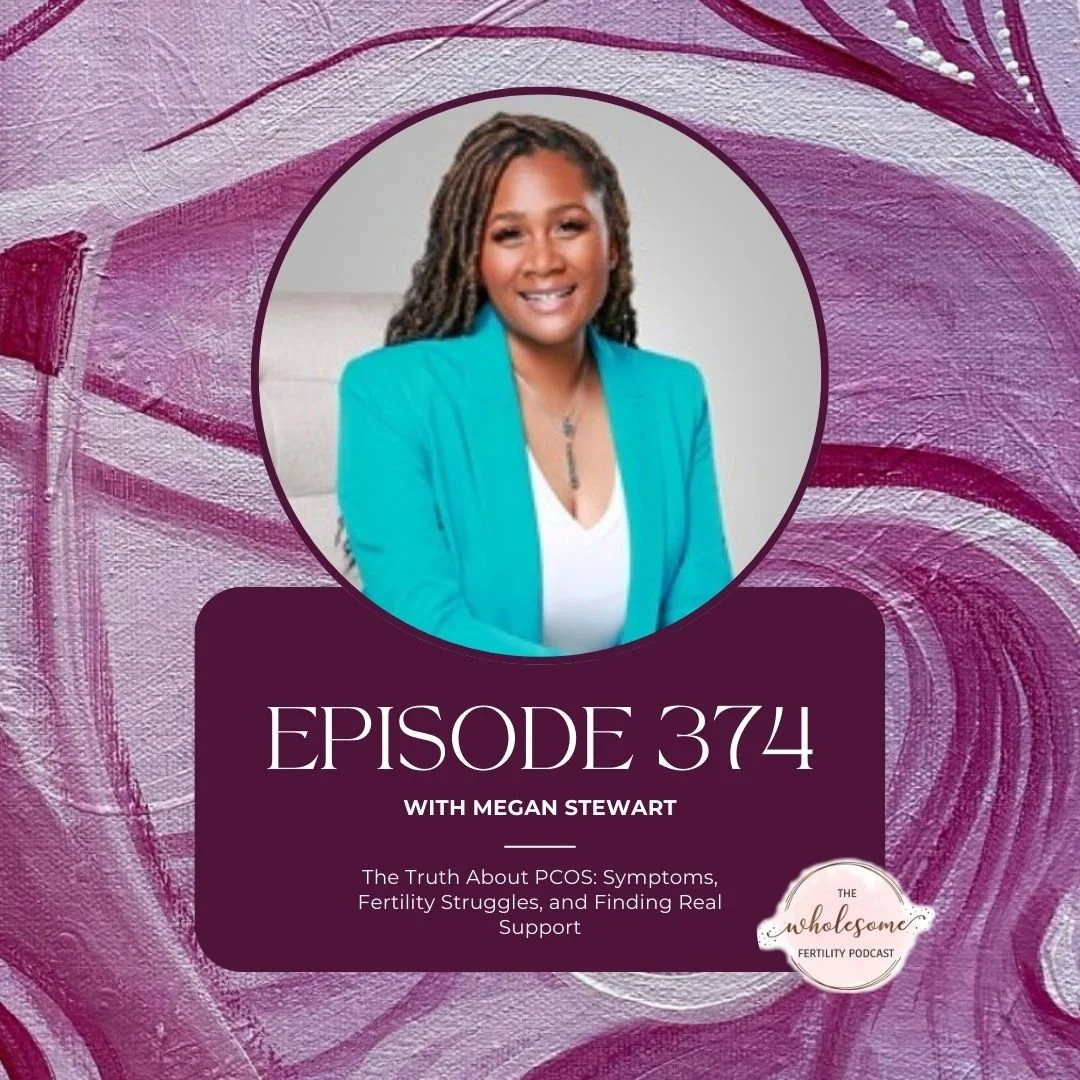
Polycystic Ovary Syndrome (PCOS) affects millions of women worldwide, yet it remains one of the most misunderstood and frequently misdiagnosed hormonal conditions. In this episode of The Wholesome Fertility Podcast, Michelle is joined by Megan Stewart, Founder and Executive Director of the PCOS Awareness Association, to unpack why PCOS can look so different from person to person and why so many women struggle for years before receiving real answers.
Megan shares her powerful personal journey, from experiencing symptoms as young as nine years old to navigating years of medical dismissal, a PCOS diagnosis at sixteen, and later cervical cancer. Together, Michelle and Megan explore how PCOS impacts fertility, mental health, metabolism, and the nervous system, including insulin resistance, elevated testosterone, anxiety, depression, and cycle irregularity. This conversation also offers hope, highlighting supportive approaches such as acupuncture, lifestyle rhythm, nervous system regulation, and holistic care that can help restore balance and empower women to trust their bodies again.
Key Takeaways:
PCOS symptoms and why they vary so widely
Misdiagnosis and common PCOS myths
Hormones, insulin resistance, and fertility challenges
The overlooked mental health impact of PCOS
Acupuncture, holistic care, and nervous system support
Building community, advocacy, and real-world resources
Connect with Megan Stewart:
Visit their website
Follow them on Instagram for more updates
Disclaimer: The information shared on this podcast is for educational and informational purposes only and is not intended as medical advice. Please consult with your healthcare provider before making any changes to your health or fertility care.
Ready to discover what your body needs most on your fertility journey?
Take the personalized quiz inside The Wholesome Fertility Journey and get tailored resources to meet you exactly where you are:
https://www.michelleoravitz.com/the-wholesome-fertility-journey
For more about my work and offerings, visit: www.michelleoravitz.com
Curious about ancient wisdom for fertility? Grab my book The Way of Fertility:
https://www.michelleoravitz.com/thewayoffertility
Join the Wholesome Fertility Facebook Group for free resources & community support:
https://www.facebook.com/groups/2149554308396504/
Connect with me on social:
Instagram: @thewholesomelotusfertility
Facebook: The Wholesome Lotus
Disclaimer: Some of the links shared are affiliates but this is at no cost to you and can even get you discounted prices!
-
[00:00:00] Episode number 3 74 of the Wholesome Fertility Podcast. Welcome back to the Wholesome Fertility Podcast. I'm your host, Michelle Orbitz, and today we're talking about a condition that so many women are quietly struggling with often for years before they ever get real answers, which is PCOS. My guest is Megan Stewart, the founder and executive director of PCOS Awareness Association, one of the leading organizations dedicated to PCOS education, advocacy, and support.
Megan's work is deeply personal. She started experiencing symptoms as young as nine years old, pelvic pain, missing cycles, weight gain, hair loss, unwanted hair growth. Mood changes and she and her mom were sent from provider to provider, dismissed, and even told that it was in her head. It wasn't until she was 16 that she finally got the PCOS diagnosis, and then [00:01:00] incredibly, she was also diagnosed with cervical cancer.
But what happened next is why this episode is so powerful. Years later, after an ER visit where she learned her ovarian cysts were rupturing and realized how little support and practical guidance existed, Megan decided she could not be the only one going through this. She began making teal PCOS awareness, bracelets by hand sharing symptoms and resources.
One conversation at a time. That small act of advocacy exploded into a worldwide movement and eventually became the PCOS Awareness Association. Today, she and her volunteer team are creating real resources for real symptoms, including mental health support, and they host PCOS con. Bringing community education and conversations, people have been afraid to say aloud into a safe space.
In this conversation, we break [00:02:00] down why PCOS can be so confusing and so commonly misdiagnosed. Why the name itself can be misleading, and how PCOS can look completely different from person to person. We talk about the hormone and metabolic pieces, including insulin resistance and testosterone patterns.
The mental health side that doesn't get enough attention and why it can impact fertility so profoundly. And we also talk about hope because there are supportive options. We explore the role of holistic care, including acupuncture. Lifestyle rhythm and nervous system support, and how creating safety in the body can be a game changer for cycle regulation and overall wellbeing.
So if you've ever felt dismissed, confused, or like your body was doing something, no one can explain. This episode is for you.
Welcome to the Wholesome Fertility Podcast. [00:03:00] I'm Michelle, a fertility acupuncturist here to provide you with resources on how to create a wholesome approach to your fertility journey.
Michelle: Welcome to the podcast, Megan.
Megan: Hi. Thank you for having me.
Michelle: Yes. I'm so excited. Um, we just had a little fun chat pre-talk about PCOS and before we get started, 'cause I'm really excited to get to this topic because of course it feels like a mystery. it's a hard. Type of syndrome to really pin down. I think that it could be so confusing for some people.
People get misdiagnosed often. So, before we do get started, I would love to get your origin story and how this is personal. It's personal, and it's also something that is a passion of yours. So would love to have you share that.
Megan: Absolutely. So, yes, it's origin story, it's a passion. I am a sufferer of PCOS myself. [00:04:00] So, it really came about now I will try and keep this as, you know, as simple as possible. It really came about because when I was nine, I started showing symptoms of PCOS, and at the time we had no idea what it was.
And if it wasn't for my mother, I probably, I don't. Like you'll learn. I don't know where I would be today if it wasn't for my mother, because she literally took me from, I just remember, you know, it's time for another appointment, Megan. It's time for another appointment. Let's go figure out what's wrong.
And some of my symptoms that I was having were. Pelvic pain was the, the huge one. Pelvic pain? no menstrual cycle. Weight gain hair loss on my head, but hair growth on my face. And arms. I just was super moody all the time. To this day, my mother will say, you owe me. And I'm like, what do I owe you for?
'cause you were just so mean. Oh. Oh, okay. So, yeah, was absolutely just. Confused [00:05:00] on what was going on with my body. I was confused. My mother was confused. So I just remember her taking me from, you know, doctor to doctor to also, you know, homeopathic specialist and just all over the place. Trying to figure out what was going on and she was told of various of things such as this is normal because she's young and, you know, puberty.
This is just something that she's just going to have to do, deal with. Was also told that I just needed to lose the weight and I would be fine. But the problem was, was like, how, how does she lose the weight? Because she's super active. I am an equestrian. I did basketball, I did volleyball, I did a little soccer here and there.
You know, I was just super active and nothing was. Keeping the weight off. I was literally like throwing on pounds if I smelled a cookie from a mile away. Right. It was just ridiculous. And then the ultimate one that she was told, that [00:06:00] she just felt completely off about was that she was told by a medical professional that it was in my head and I was.
Faking the symptoms to get out of, to get out of school and practice and all the things. And she recently actually told me that she put me on a placebo pill just to test that theory, only for it to realize about two weeks later that no, it's not this is not in this pork child's head. This is something is wrong.
Michelle: yeah.
Megan: So again, from ages nine to 16, I was just, you know, trying to figure out what was going on with me. And I just remember also feeling that. I was lost because me personally, I was lost because it was like nobody is understanding me. Nobody is, is, is like really telling me what is wrong. And, and on top of that I'm gonna date myself here, but you know, I come from the time of 17 Magazine y magazine.
Z, all those [00:07:00] different things that were like, oh, this is what you're supposed to look like. You're supposed to be cute and little. And I wasn't. So it was just like, no, I. You know, self my, my self body image was not a good one. So I finally remember, I can't remember exactly, how we ended up at another O-B-G-Y-N, and she immediately looked at me and said, I'm gonna run some tests.
Those tests came back and she was like, oh, you've never been told you have PCOS. I kind of figured you, you have PCOS. And it was kind of like. No. Like, what, what is this? And you know, polycystic ovarian syndrome was what she said to to us. And she was like, you really nothing you have to worry about until you're ready to have children come back to me when you are trying to get pregnant.
again, 16, I was like, Ew, I don't want nothing to do with no boys. I'm okay. I'm okay. So, but ultimately, as well. Another diagnosis came along with the [00:08:00] PCOS diagnosis is I was diagnosed at 16 with cervical cancer. So there is there are studies out there that say like there's a correlation between PCOS and cervical cancer along with Rine cancer.
Ovarian cancer, breast cancer. there are just a lot of studies out there that correlate the, the, the mix of them together. So, of course, you know. She says, you know, come back to me when you're ready to have children. I wasn't thinking about that. And the diagnosis of cervical cancer was immediate on the mind.
So it didn't come about until maybe about 21, 22 when I didn't have health insurance and I was working at a job. I remember just feeling so sick one day and I remember going into the office and everybody sitting at my desk and everybody looking at me and they're like. What's going on with you? Like you, I'm a black woman, so all the color had drained out of my face.
I just felt clammy. I felt [00:09:00] like sticky just not well. And I called, called my mom again. Mommy called my mom and was like, Hey, something's up. I need to go. She was like. Meet me at the er, met her at the er and they looked through my, my, my charts and everything and they said, oh, you have PCOS. Yeah, well it kind of looks like we're gonna do some other tests, but we're gonna do an ultrasound and everything.
Came back with that and it looks like your cysts on your ovaries are rupturing. What, like nobody said anything about, you know, this is what's gonna happen and here's how to handle that. It was literally just come back to me when you're ready to have children. So, Walking out of the er, it was very much, my mom was like, oh no, what's about to happen?
You, I see it in your face, what's going on? And I said, no, I cannot be the only person that's going through this. I [00:10:00] cannot be the only person that's going through this. And there has to be information and resources out there. I go and you know, at the time I think it was Craigslist was pretty much the only like social media that was out there.
And Craigslist has this part that, you know, you can talk to people.
Michelle: You look too young to know this. I'll have to, I have to say,
Megan: Girl, I'm 40. I'll be 42 this year,
Michelle: you look a lot younger, just in my eyes, so.
Megan: I appreciate it. But, but yeah, it was they have like this it's almost like Reddit. You can post like to the message board and you can respond to things in, in Craigslist. I remember going out there and I just searched PCOS. I'm from Seattle, so I searched in the, Craigslist for Seattle and there was maybe four or five people within there that was like, Hey you know, have you heard of this thing called PCOS?
I have it, and, and I don't know what's going on with me. Does anybody have any advice? So with that. It was like, [00:11:00] okay, I'm not the only one, and people are actually out here looking for things. So what, what's out here? What's giving information? So then it was a Google search of like, what's PCOS?
At the time there was maybe one, there was one large organization and couple years later there was another large organization out there that had to do with PCOS. But when looking at the information, it was very much just. The medical professionals didn't know. It was very much like, oh, well here's what's out there currently, but we still don't know, like we don't know.
And then on top
of the birth control pill.
Oh, oh, yeah, yeah, yeah. Don't get me started on that one. But,
Michelle: Yeah.
Megan: but yes, and it was very much like there was no resources, actual resources out there for PCOS and it was confusing to me. All of the things was just very, very confusing. So, after a couple of years and people, you know, family and friends asking me very close with, you know, my [00:12:00] family.
And after er visit, of course, everybody's now calling like, Hey, what happened? What's going on? Are you okay? And I was like, okay, well, PCOS, well what's that? Okay. So now I have to devise a way for, to, to share this information with my family and friends. So I came up with this idea of creating, I had found out the official color was teal.
I started creating like handmade teal bracelets and handing it out to family and friends along with telling them like. PCOS, polycystic ovarian syndrome. And then here's like some symptoms. And here's this here that like, I was literally like the resource of like, here, here, here. Take this, here, take this information.
And now if you wear this, you are now going to be able to tell people who ask you about like, what's, what's the steel bracelet you're wearing That's amazing. You were raising awareness right after like that's.
know. So, it was around the time that Instagram started and what was it? Wonder [00:13:00] Woman, the movie Wonder Woman was coming out and she had that infamous pose of like, you know, I'm Wonder Woman type thing.
I had a cousin who actually asked me for like. I think she had ordered maybe 20 of those handmade teal bracelets from me. And then she went on Instagram and did the Wonder Woman pose in those bracelets tagged me and hashtagged PCOS. I could not like. I think I woke up maybe two days later to my phone just being bombarded with messages on Instagram asking me, Hey, I have PCOS too.
Where do I get a bracelet? I've never seen anything like this. What can I do? I need more information. It was just from all over the world. I had people New Zealand. It, it was just insane to me that people were reaching out and I. Didn't have, like, I was like, oh, what, what do I do now? So I literally started my own little, like assembly line of friends and family of like putting [00:14:00] these bracelets together, getting shipping addresses, mailing them out.
And at the time I had no idea that shipping to like. India and, and New Zealand and, and Britain and all those places was actually going to cost me more
Michelle: The than, than the actual, you know, putting the things together. It was insane. But I came up with this idea of like, okay, I'll sell this to you for like $5 and if you send me the $5 and I send you the bracelet, I'm gonna use the $5 to get a 5 0 1 C3.
Megan: To start PCOS Awareness Association and here we are what the right, like what, 14 years later. And I am so proud of my team and where we started to where we are today and all the different resources and that's the number one thing that we try and do. It's not just about the information. I literally have sat down with the team and we're like, oh, okay.
A symptom is mental [00:15:00] health, right? It's depression and anxiety. So where can we help in that area? What kind of resources can we provide to help in that area? We've teamed up with Crisis Text Line. You text PCOS to 7 7 4 1 7 4 1, and you now have a resource, for, you know, your mental health with PCOS the hair growth on the face, the hrsm which is hair growth on the face. And some people also have it back, chest, you know, all over their body. The extra hair growth. We've teamed up with Milan, laser hair removal to offer their services. We've, we've just, for every symptom we have tried to provide an actual resource, whether it's, you know, one resource that we've teamed up with, or a slew of resources that we've also teamed up with.
Um, so. Yeah, I'm pretty excited and I'm pretty I'm proud of the team.
Michelle: I bet, I mean, that's a, that's a huge undertaking and it's a huge it, it has such a huge impact on so many people. It's a great resource because [00:16:00] I feel like so many, specifically with PCOS, so many people are so confused. There's a lot of misdiagnosed people. with very. Doctors like that are professional and and so it, it could be a very confusing type of syndrome because it looks so different on every person.
So, to break that down, I'd love to talk about that really like, to describe to people listening who you know, of course this is a fertility podcast, but it really impacts fertility health because it impacts the menstrual cycle. And we talked about this in the pre-chat. I think that I had undiagnosed PCOS, I had my hair fell out.
Thank god it grew back, but it really fell out to the point where it was really, it scared me.
It scared my dad and they was like, oh, what's going on? Like, you used to have a full head of hair and, and all of a sudden it started thinning on the top. I had chin hairs. I had like bouts of acne at different [00:17:00] times.
It, it came and went irregular cycles. So, I mean, looking back. My circadian rhythm was off. That's another thing that since I've been doing this, learning about how it not only impacts your menstrual cycle, it impacts your ability to lose weight. It's very hard to like get it off. But sometimes people could be on the thinner side too, so that's where it could be so confusing.
And then also, you know, it impacts depression. Like I used to have depression in, my teenage years. And, and when you were talking about how you felt or the moodiness, it's almost like, I mean. It's not your fault, it's like a physical thing that you're going through, and you could be looked at like, why are you like that?
But that's something that you're, you are just not feeling right in your body, in your mind. So I'd love for you as, as you know, as much as you can kind of compact it. And describe to people what is PCOS and [00:18:00] how it can impact or ref, I guess, express itself in different people.
Megan: Yeah, absolutely. 100% of everything you said. And yes, this is a fertility podcast and that's. Why I'm here,
Michelle: Yeah.
Megan: because PCOS is the number one cause of fertility, infertility in women. You know, so normally that's normally how women are diagnosed with PCOS when they are trying to get pregnant and they're having problems.
You can go to a, you know, your medical professional ob, GYN, endocrinologists. I've even heard of people who are going to like dermatologists. 'cause as you said, the acne portion. I've even heard of mental health therapists that they're not diagnosing, but they're suggesting that. Some, some something's up here, you may wanna see somebody.
So ultimately, you know, you, you're having troubles getting pregnant and they're running panels and they're realizing like you have PCOS. So some of the symptoms and the crazy thing about [00:19:00] PCOS is because it's a syndrome, is that they are literally finding new. New symptoms all the time. There was one that recently came up, well, not recently, it's been a couple of years now, but it made perfect sense to me because I, at the time was struggling with it.
And that's tooth decay. I,
Michelle: Hmm.
Megan: let me tell you, I am, you know, twice, twice a year dentist brush, you know, all the things, do all the things I need to do to make sure I'm taking care of my, my mouth health. And it's felt like. Within a month. I was like at the dentist like 12 times. It was nuts. They were like, oh, you know, you have, we're gonna have to do a crown.
We're gonna have to do a root canal. It was
Michelle: And all of that impacts fertility as well, kind of even on its own.
Megan: right. Yeah. So it was. Right. So yes, they are definitely finding new symptoms all the time, but some of the symptoms, other symptoms of definitely infertility, [00:20:00] weight gain, hair growth on your face, so let's, let's put it this way instead. PCOS also causes higher testosterone in women that have PCOS.
So if you're thinking about higher testosterone and you're thinking about men, they're going to get hair growth on face, neck, back, you know, arms, all the things, but then they start losing it on their head. Male pattern
Michelle: where we want it.
Megan: Right. Well, exactly. Our crowns, we, we want it there. So, think of it the same way for women with PCOS.
You are going to get hair growth on the face and neck, chest, back, arms, all the places you don't want it, and then you're gonna lose it on your head. So herm, that's the hair growth is a symptom. Depression, anxiety. I can't even tell you how, like my watch, I have a, what is this? The Garmin watch.
And I kid you not every day, it's like, oh, stressful period. Stressful period. And I'm like, stop telling me. That's even more stressful. Like [00:21:00] my, my anxiety level can go from zero to a hundred. My poor boyfriend, like, I feel bad for him because I literally, he can tell, I'll, I'll sit there and I'll be quiet and he's like, what's going on?
What's happening? And I'm like. I wish you couldn't tell this in me, but, but yes. Anxiety is high depression, and I feel like that's also a vicious cycle, right? You get high anxiety, you get depressed, you get depressed, you get high anxiety. You are just going in a vicious circle. The acne. I can't even tell you how many times as an adult, I'm like, where did this patch of acne come from?
Like, why, why is this even happening? I, I also have a lot of women have cystic acne because of their PCOS. Tooth decay is another one. We have what's called, and, and that also comes with the insulin resistance, right? And that's kind of like where the weight gain comes from as well. And that is the reason why they also give women with PCOS Metformin, which is a diabetic medication.
[00:22:00] I hate that. I hate it. I'm like, I do not have diabetes.
Michelle: Tel Works very similar to that, and it's more natural and it also has added benefit of improving equality.
Megan: absolutely my own acetol. What's another progesterone? They try and give you birth control pills? I've definitely noticed that in the last maybe 20 years. It's like, as soon as you turn 15, 16, here, take these birth control pills, they'll make your life better. No.
Michelle: I was giving them too. Same.
Megan: Right. Right. I feel like that's, that's, that's like the norm now.
What are some other symptoms? So, I do wanna preface that. The name polycystic ovarian syndrome is deceiving. And I have, you know, there is chatter that they are trying to change the name. Because you can have cysts on your ovaries or like me, at any given time, your cyst could be ruptured and not there.
So,
Michelle: And it's not really cysts, it's follicles, which could be confusing [00:23:00] 'cause people are gonna think it's a bunch of cysts. But it's actually follicles that are not fully grown. So multiple ones will go and then they'll stop, and then it's just gonna continue. And, but nothing's really, so people go through IVF and they'll have so many eggs retrieved and they're like, oh wow.
40 eggs. And, and then nothing. Nothing. Nothing turns into an embryo or like very, very few, if any.
Megan: Right. Absolutely. So it's, I, I like to think or say, or it is that PCOS is an endocrine hormonal disorder, right? It's, it's going to affect you from head to toe, literally from head to toe.
Michelle: Yeah.
Megan: So, thinking about it that way, your symptoms. Let's say you, you had, you were formally diagnosed with PCOS.
Your PCOS is going to look very different from my PCOS, and that's why it's such a struggle for medical professionals for us living with PCOS. I did a podcast recently [00:24:00] and the gal had asked me like, what do I want to see like in the future for PCOS? That, that is one of the things I wanna see. I want to see that people are correctly diagnosed, whether it's people being diagnosed and they actually have PCOS or we're also getting the other, the reverse, right?
We're getting people that are being diagnosed with PCOS and it's not PCOS. So I want to see that correction because that's not helpful. That's not helpful for those that, you know, for anybody in that, that aspect.
Michelle: No, a hundred percent. And it's yeah, that's one of the biggest things that is so confusing for so many people. And people may not realize, they think, oh, well I have a regular period. I can't possibly have PCOS. And that's another big myth. I mean, there's so many myths connected to this diagnosis.
Megan: absolutely. 100%. And it's, it's a struggle because PCOS can also look like what's it, [00:25:00] Hashimoto's? Fatty liver diabetes I've heard there's a couple of others that I've heard as well that it can mimic. So yeah, getting that proper diagnosis is going to help in the future, right?
Like if I get the proper diagnosis, that means now we have, we can have a path going forward.
Michelle: Yes, a hundred percent. And and have you heard about the circadian rhythm connection with
Megan: I have, I have. So, I, I myself have not got dived into that. But I have heard it. We had a partner was it last year? I think it was last year during our PCOS con event. That, that, yes, they definitely spoke about that.
Michelle: Mm-hmm. Yeah, it's pretty wild because with Chinese medicine, how we, we perceive it, and we were talking about this too, about acupuncture. One of the things about PCOS, I'm just gonna kind of throw it out there 'cause it sounds so like, oh my gosh, like, what do I do? But there are a lot of really amazing things that can be [00:26:00] done.
For me personally, and you talked about this too, acupuncture was what really shifted for me. Now, I'm assuming I did have it, but looking back, I had two out of three that I know for sure. I didn't do the ultrasound, so I probably did have it. And I had irregular periods for going on 12 years at the time,
Megan: Yeah.
Michelle: and acupuncture was the one with.
Solution that literally shifted everything for me, acupuncture and herbs. And I also started meditating, so I feel like a lot of those things really impacted it. I wanna throw that out there because.
Megan: Absolutely.
Michelle: seems it could be very depressing, just like being like, oh my God, what do I do? You know, what can I do?
But there are things that you can do, and it is actually something that I found. Now, of course, every person's different, so I'm gonna kind of mention that. So not everybody's gonna respond to the same things, the same, but diet, exercise, supplements, acupuncture. There are a lot of things [00:27:00] that can be done.
That can be very, very supportive. And I know for myself doing the acupuncture, like I, it completely regulated me and I, it was no turning back, like completely, completely regulated me. And I also felt a shift in my emotions and my anxiety and my, you know, I'll have a tendency if I'm really drained and a lot going on. That's probably kind of my default.
Um, it'll kind of go right there, but I You could learn to manage it.
Megan: Absolutely, absolutely. As we were kind of chatting before, same it was about 10 years ago, I did, I found a woman's health acupuncturist and I went to her for maybe, maybe six months. And the way that my, I, I have really never had a normal cycle, right? I actually, when I was diagnosed with PCOS, I still hadn't had my first.
Cycle. So they had put me on progesterone and I had, my very first cycle lasted three months. It [00:28:00] was nuts
Michelle: no.
Megan: was heavy every day. It was horrible. And so, after that I still wasn't even, even on birth control pills. They had put me on birth control pills. And even then, I still was not regular. I could go maybe a month, have it two months, nothing a month have it.
It was just, it was nuts. So, I had cervical cancer again, and after that I was like, I'm al I'm always having like these revelations, right? And it's like, no, I am not doing. Medications anymore. I'm not doing it. Like it's not helping, so I'm gonna try something else. And I went completely natural, found a woman's health acupuncturist.
I did get you know, she, she mixed herbs and stuff for me as well to drink in hot water and that kind of things. But it was the acupuncture that I could really stick to. And again, I went for about six months and since then. I like, like clockwork. I could tell you exact the exact date when my cycle [00:29:00] is supposed to start.
And it starts by itself. I came off of birth control pills. It does, it does what it needs to do now.
Michelle: Yeah. Yeah. Isn't it amazing? And it I I kind of liken it, like I, I like to compare it to almost and this is kind of like the whole idea of the clock we were talking about, the circadian rhythm. It's a pulse. It's one of our pulses now. We have many different pulses. All of life has pulse.
Everything kind of goes back and forth. We have waves. That's how the whole universe functions. It has cycles, and so there are some smaller cycles, some larger cycles. The 24 hour cycle is our circadian cycle, so if the hand of the second, the second hand doesn't work, it's gonna impact the hour hand.
Megan: Okay. Yep,
Michelle: So it's kind of like everything impacts everything.
So that's where it really made sense to me that for me personally, my circadian rhythm was off. Not everybody, but like some people, they have that correlation [00:30:00] and mine was completely, completely off. I could not wake up, like it was very hard for me to wake up. I had to for school, but I could sleep till two, three
Megan: Oh, oh, yeah. Yeah, that's me. I could
Michelle: yeah,
Megan: day. Anywhere. Anywhere. Like I could probably pull up on this table and just.
Michelle: Yeah. But now luckily I've shifted that over time. It just kind of forced myself to shift it and one of the ways to shift it. And it takes a little time, especially if you've been like that for a very long time. It took me years to shift it. I still am not like a super morning person like. So I'm just gonna kind of throw that out there. But the sun, the light, light impacts us. So getting that early morning sun anchoring our body, pretty much what it does is it gives our body a message, Hey, it's morning. It's daytime, you should be awake. So getting that sunlight, having your eyes perceive the sun, not look directly, but to get that sunlight wakes up your body.
[00:31:00] And then similarly, at night, dimming the lights a couple of hours before, kind of like really trying to make your inner house environment similar to outside what's outside, which is darkness. At certain times. So going with that, also eating with a cycle, not like, intermittent fasting where you're like stopping in the, like not having breakfast 'cause that's gonna cause more cortisol.
But finishing notorious,
as the sun goes down, like having a couple, a good couple of hours. So fasting at night and going with that rhythm. So this is all kind of like. Based on Ayurvedic principles, Chinese medicine, really honoring the cycles of nature because the cycles of nature will, they're so strong, the force is so strong, it'll kind of bring our bodies back into that regulation.
So it's kind of a regulatory thing. It's kind of like a rhythm thing too. I mean, there's many other things obviously that impact it, but a big part of it is kind of like our bodies and training with [00:32:00] the rhythm of nature. So it's kind of like, like a train on tracks. It just veered off the tracks. We need to kind of bring it back.
And so that was kind of what happened with me, and it was as soon as I got the acupuncture and I started to do a couple of other things, it brought me back on track. And then it was kind of like, it just kept repeating. Similar to what you were saying.
Megan: nice. And I know that you said you do, you do meditation as well. I got a question for you on that
Michelle: of course.
Megan: because I, you know, it's hard, it is hard to meditate because you brain is like, go on a 20 million miles per hour. What I found myself when I was getting into meditation and whatnot is a singing bowl.
you use singing
Michelle: Oh yeah, so I used that actually in the beginning of every session with my acupuncture. Like every time I get the needles in with my patients. I put I put a bowl. Like I, I sound a bowl and I put it around their bodies so that they can get immersed in the sound. And not only [00:33:00] that, they have a bunch of antennas in their bodies with these like metal, like
Megan: right. You
get the little, the little zappy
Michelle: into their points.
So, so that vibration really goes directly into those
Megan: Right. I like it.
Okay. Okay. I was writing it then because
Michelle: But it is, yes. You're on to something. The sound really calms your nervous system. And as a matter of fact we have our own sound, which is our voice, and this is why humming activates the vagus nerve, which puts us in a more rest and digest state, which people with PCOS need more of that.
It helps also with digestion. There's a link with gut health and PCOS and so, so, humming. Mantras, you know, all the things that the ancients knew for thousands of years. They used to hum. They used to m and there's specific seed mantras that you can sound in your, in your, you know, in your voice with your mouth closed sometimes or [00:34:00] humming like so That vibration that you feel impacts your vagus nerve, shifts your nervous system from a survival to a more creative.
Megan: that makes so much sense. That makes so much sense to me. Now I'm So, so tell me, tell me about the Sound Bowl.
Yeah. Yeah. No, no. I, I got a big one
Michelle: That's awesome.
Megan: and Right. I often feel in my chest the most. And yes, like you're saying that it makes perfect sense about the humming because if I don't use, like, if I'm nowhere near the bowl I will.
Find a rhythm within myself, like a, a tune within myself and I will sing it or hum it to myself. So that makes perfect
Michelle: Intuitively. See,
look at that. Without even realizing that that's what I'm doing. So that makes so much sense. Thank you for that insight.
Yeah. Yeah. No, I mean, first of all, I, it's just a reflection that [00:35:00] you are more intuitive than you realized,
Megan: Great.
Michelle: you know? And I think that that's what it is. I think that a big part of this whole thing is, is to trust ourselves. And I think we put and I'm sure you can relate to this, and I'm sure you see this a lot.
We put so much of our. Trust outside of us, especially when we're going through this, which can sometimes, especially if like the medical community doesn't really understand it and they, they say they don't really understand it. And we're putting all our trust in in that. And part of how we're made up is that we have this in innate intelligence within our bodies that communicates with
Megan: Yeah. Oh yeah. To protect yourself. So yes, that's the number one thing that I definitely tell people is that you need to trust those feelings. If you're feeling like you are not being heard by your medical profession, professional, go get another one.
Michelle: absolutely.
Megan: get another one.
Michelle: Yeah, and it's a game changer.
It could change [00:36:00] everything.
Megan: Yeah. Again, if my mother had not trusted herself in knowing. Me. I don't know where I would be today. Like, I
Michelle: I love your mom. Like everything that you're telling me, she sounds like such an amazing mother.
Megan: She is, she is. And in that so she was recently diagnosed with Alzheimer's or dementia, and she actually is, she looks at me and she says, oh, well, you know, you were, you're such a voice for the PCOS community. I now want to donate myself. As in like, I want to be a part of Alzheimer's or dementia studies.
Because I feel like you, you did that and now I need to do it. So she has definitely, yeah. She's, she's so
Michelle: so you've inspired her. Look at that. That's incredible.
Megan: right. We, we played off of each other, so she helped me. Now it's time for me to help her.
Michelle: Aw, that's so sweet. And you know, I'm really hoping, Megan, that for both PCOS and you know, Alzheimer's dementia, that [00:37:00] we're gonna move in a direction that's more innovative and. I really am. And I feel like, I think people are really kind of going back to the basics and learning a lot now, and the information that we never really used to have, like the podcast and is coming out, there's a lot of information on really coming back to the basics.
Nutrition, certain supplements, certain medications. So I feel like we're kind of in a place, I think collectively that we are moving to more solutions than Yeah, I, I feel it too. And when I like was first starting with P-C-O-S-A-A, like, it drove me nuts when every time I would go look for, labs and everything that are studying PCOS. The main thing that they were studying was like the weight loss and the fertility portion. And I'm like, how can you study that without even knowing what it is?
Megan: Like nobody knows what it is
and where it came
Michelle: [00:38:00] body, like specific constitution. 'cause not every Constitution would do well with that.
Megan: Correct. So I actually ended up finding one lab in the US that is studying like the origins of, and what is PCOS. And we've partnered with them and it's Lugen Labs out of Cornell University. Dr. Lugen is absolutely amazing and so her studies, I can't
remember
Michelle: get her on the podcast.
Megan: Yeah, you should. She's absolutely ama amazing. I love her. Doc, she, she literally, I can't remember when she first started like her studies, but they are now. At the point of where it's providing information. 'cause you know, when you start a study, you, you need like five years,
Michelle: Yep. To collect data. It was just data
Megan: data. Right. So she's now at the point where she is getting, getting the data and getting the results and compounding it into actual viable resources and
Michelle: that's incredible.
Megan: [00:39:00] Yeah, I can definitely connect you with
Michelle: Yeah, that would be great. 'cause I think that so many people would benefit from getting that information.
Megan: Yeah, she she, she has, you know, resource assistance out of the college that sometimes attend our PCOS CON event, our yearly annual PCOS con event, and they give report outs. During that event, the last time we heard from her a report out was not 2025, but 2024. So I'm sure she's got more, more to share.
She normally does a, a tag up a quarterly tag up meeting with my board to let them know of any findings that she's, they've found or, or how they can help support the PCOS community and what we can do. You know, it's a, it's a it's a, it know, a partnership.
Michelle: I, I just love what you're doing. I just think that what you're doing is so powerful. Like it's crazy how, you know, people go through things all the time, but what makes a person like realize or act upon that problem that [00:40:00] many people are facing and saying, Hey, you know, people need to know more about this, and kind of the choice that you made.
To create this incredible community and resource for so many people. I think that's a big deal. Like not everybody would act on doing something like that. And then in turn, you're not only influencing so many people, you've influenced your mom. It's incredible.
Megan: Thank you. I appreciate that. Because it's, it's rough.
Michelle: I'm sure
Megan: It could be, it could, yeah. It's a lot of work. I you know, the nonprofit, we are all, when I talk about the board and everybody on it, we're all volunteers, including myself. None of us are taking any paychecks or anything like that. We all have day jobs.
We all have lives that we lead outside of it. And I think that's the number one thing that I hope that people like when, when they are looking at starting things, please, please do, but at the same time do know [00:41:00] it is hard work and that you really do have to need to have a passion for it. And I. Strongly feel for personal.
My personal, like this is my legacy. This is what I was put on this earth to do,
Michelle: That's amazing. It, it's incredible because I feel like you know, with all that work, you are moving the needle.
Megan: thank you.
Michelle: Just people listening right now to realize, oh, there's something that can be done. There's resources, and I can find out more information. I think just kind of demystifying that, just the demystification aspect without even the resources is huge.
Megan: Thank you. I appreciate that.
Michelle: Yeah, I think it's amazing. So for people listening, if they wanna learn more and they want to like maybe go to your events eventually, or you
know, Yeah, How can they find you? Where do they start?
Megan: Yeah. So we do have a website and it's www.pcosaa.org. We have a website [00:42:00] separate from that, that is our, for our PCOS con. So, in 2019, I brought, I know my board hates me sometimes because sometimes I'll, like, I wake up in the middle of the night and I'm like, Ooh.
Michelle: That's a download. That's what that is. That's the PCOS. Angels talking to you. Be like we need you for something else.
Megan: Right. So in 2019, I, I went to the beginning of 2019. I went to the board and I was like, so I wanna put on something called the PCOS con and I wanna do it this year.
Michelle: Wow.
Megan: were like, you're nuts. But we did it. We put on PCOS con and it was supposed to be every year, but then of course 2020, our lovely pandemic hit and we had to you know, we had to. Go a different direction. We went virtual, so in 20 20, 20 21, and then 2022 we were virtual. So we have decided going forward, we are even years, we are virtual, odd years we are in person. So in 2025 we [00:43:00] did New York we did New York and LA in 2025. And in 2023 we did New York. LA and Texas. So we are, we're trying to like, you know, travel and bring it to people and make sure that we are, you know, get, getting all sorts of people to be able to come into the actual event.
So for PCs Con, we do have a separate website for that, and it's just PCs con.org that you can find that we are on all social media, including, let's see, Facebook. TikTok Instagram, Pinterest, LinkedIn. Somebody was telling me that I need to do Reddit, but I really don't even know.
Michelle: I know there's so
Megan: Look, look people old,
Michelle: I know day something new comes up and I'm like, what? What is
Megan: right?
Michelle: And then I have to learn this new thing.
Megan: No, I, the team does it. Like they, they all said, oh, we need TikTok. And I was like, I sure hope you guys don't think that I'm gonna be on TikTok doing these little dances and, and out here. 'cause [00:44:00] I, 'cause I'm not
Michelle: yeah,
Megan: like, I'm even, I'll be very honest with you. I hate being on video. So, which is, which goes back to kind of like what you were saying is, you know, even our own voices, bring, bring kind of a balance. I, I, I don't, I mm-hmm. I don't like being on video because I do not like listening to myself after the fact. So that was an interesting pull from what you said as well. So,
Michelle: No, but if you, if you have the voice just without hearing yourself back,
Megan: Right, right. If it's internal, it's my internal voice. It's we had a call last night and they were talking about naming, naming your PCOS, and I was like. Is this something that I can ask chat, GBT to name for me? Like I can put a name to my own PCOS and so then that, that'll be the voice that I hear within my head is that name.
Michelle: That's awesome.
Megan: But, but yeah, so you can find us on all, all the different social media. We would absolutely love to have, you know, your listeners be a part during PCOS con. One of the [00:45:00] things we like to do is we like to have different. Sections, different topics that we talk about. Fertility is definitely a topic that we talk about.
One of the other larger things that can go along with fertility right, is the taboo topics. So we have a section of PCOS con where the first year we did it, we literally came down from, it was at a hotel, so we all came down in our PJ's and we had like, beanbag chairs, popcorn in the middle of the night.
And we discussed those taboo topics. That have to do with PCOS, sex, fertility just those things that people don't, don't feel comfortable, you know, voicing out loud. We made a very comfortable space to be able to talk about that, those types of things.
Michelle: Amazing. Well, Megan, it was such a pleasure meeting you. I think what you're doing is incredible and and say hi to your mom for me
Megan: I will.
Michelle: because she's, she sounds amazing. She sounds like a gift. And really wishing you and her and your organization the best.
Megan: Thank you so much. Thank you for [00:46:00] having me.