
Ep 392 The Second Clock Inside Your Body: The Rhythm Women Were Never Taught to Read
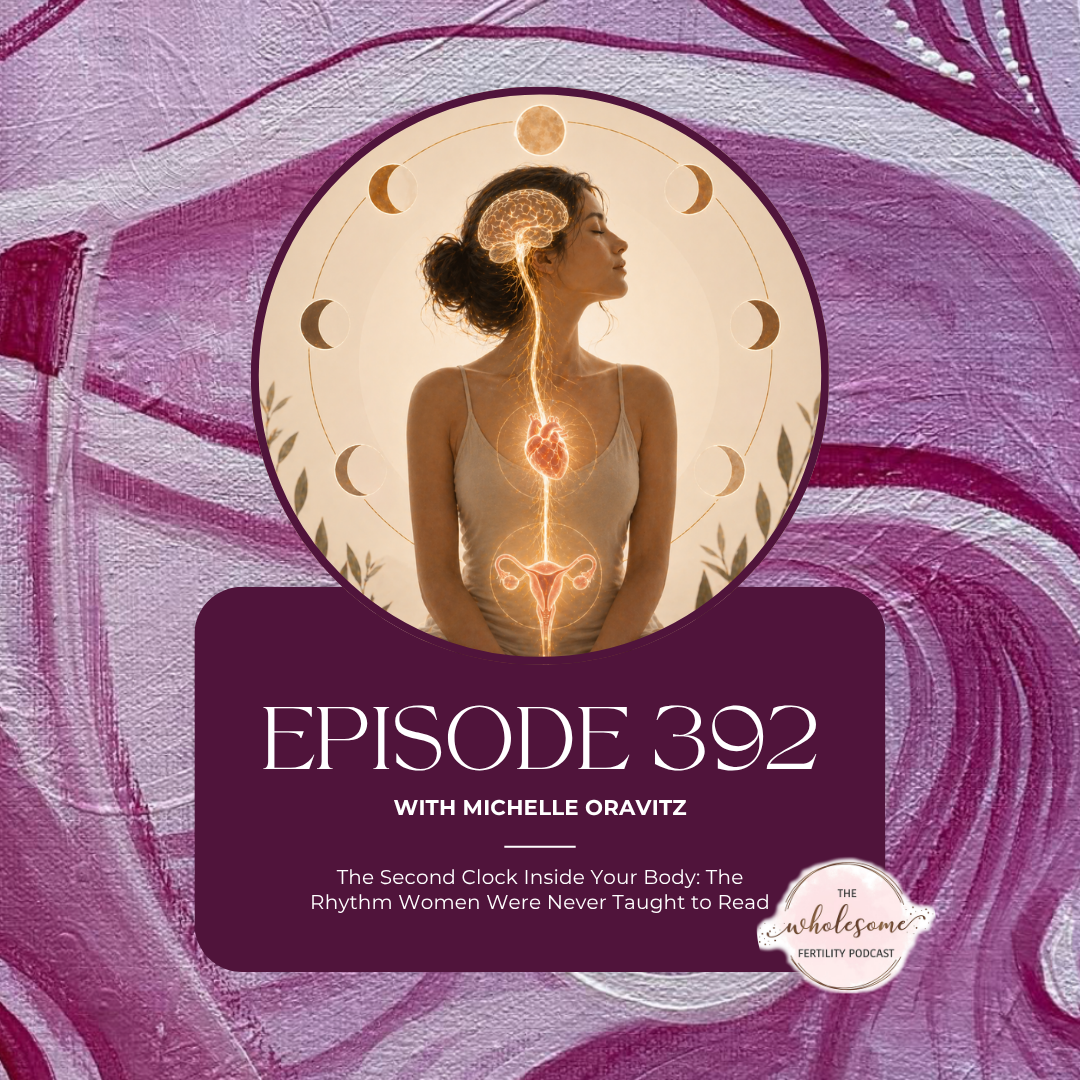
Most women have been told their cycle is something to manage, track for fertility, or push through. What almost no one is saying is that your cycle is a second biological clock running inside your body at all times. The circadian rhythm is roughly 24 hours and is governed by light. The infradian rhythm is roughly 28 days and is governed by the menstrual cycle. Men have one main rhythm. Women have two. This is not a flaw in our design. It is added intelligence.
In this solo episode, Michelle walks you through what is actually happening underneath the surface of each phase. Your brain structure shifts across the cycle. Your immune system, metabolism, insulin sensitivity, microbiome, and nervous system are all moving with you. You will learn why the same stressor can feel completely different from one week to the next, why luteal phase cravings are real signals and not willpower failures, and how to begin matching your work, food, and rest to the phase you are actually in. Whether you are trying to conceive or simply want to stop fighting your own body, this episode offers a more accurate map of how you are designed to function.
Key Takeaways:
Women have two main biological rhythms. The circadian rhythm is roughly 24 hours. The infradian rhythm is roughly 28 days and is governed by the menstrual cycle. Most lifestyle and research advice is built around the male 24-hour clock, which is part of why so many women feel exhausted.
Your brain structure literally changes across the cycle. The hippocampus shifts in volume, connectivity between regions changes, and verbal fluency, spatial reasoning, and pain perception all move with the phases. Feeling like a different person at different times of the month is neurobiology, not emotional volatility.
Your immune system is rhythmic. It is more active in the first half of the cycle and shifts after ovulation, when progesterone becomes mildly immunosuppressive to prepare the uterus for a possible embryo. This is why colds, autoimmune flares, and allergies can shift across the month.
Basal metabolic rate rises slightly in the luteal phase, and insulin sensitivity changes. The same meal can land differently depending on where you are in your cycle. Luteal phase cravings are often a real signal of higher energy needs.
The gut and vaginal microbiomes also shift cyclically with hormones. You are not a static system. Everything inside your body moves with you.
Heart rate variability tends to be higher in the follicular phase and lower in the luteal phase. The same stressor can land very differently depending on when in the month it arrives. Your nervous system is operating from a different baseline.
From a TCM perspective, the liver works harder in the luteal phase to prepare for menstruation, which can show up as more irritability, less energy, and stagnation when qi is not flowing freely.
Working with the cycle is not just a fertility tool. It is a way of living that supports energy, focus, mood, and recovery across the entire month.
Practical starting points: track more than your period (energy, sleep, mood, focus, hunger, stress response), match the work to the phase when possible, and eat in a way that responds to what your body is actually doing in each phase.
Research and Resources Cited:
Brain structure and function changes across the menstrual cycle (hippocampal volume)
Cyclical changes in hippocampal volume across the menstrual cycle
Menstrual cycle effects on cognition: verbal fluency and spatial reasoning
Pain perception and threat sensitivity across the menstrual cycle
Disclaimer: The information shared on this podcast is for educational and informational purposes only and is not intended as medical advice. Please consult with your healthcare provider before making any changes to your health or fertility care.
Ready to discover what your body needs most on your fertility journey?
Take the personalized quiz inside The Wholesome Fertility Journey and get tailored resources to meet you exactly where you are:
https://www.michelleoravitz.com/the-wholesome-fertility-journey
For more about my work and offerings, visit: www.michelleoravitz.com
Curious about ancient wisdom for fertility? Grab my book The Way of Fertility:
https://www.michelleoravitz.com/thewayoffertility
Join the Wholesome Fertility Facebook Group for free resources & community support:
https://www.facebook.com/groups/2149554308396504/
Connect with me on social:
Instagram: @thewholesomelotusfertility
Facebook: The Wholesome Lotus
Disclaimer: Some of the links shared are affiliates but this is at no cost to you and can even get you discounted prices!
-
Michelle Oravitz (00:00) The cycle is the second clock. are two main biological rhythms running inside your body at all times. The first is the circadian rhythm and it's roughly 24 hours long and it's governed by light and organizes things like sleep, body temperature, hormone release and digestion. Most people have heard of the circadian rhythm, but the second is called the infradian rhythm and it's roughly 28 days long. It's governed by the menstrual and it organizes a much wider set of functions in the female body. This is the one that almost never gets talked about outside of fertility conversations. Men have one main rhythm, the daily one. Women have two. And that is not a flaw in our design. It's actually an added intelligence. But because most research and most lifestyle advice is built around the male 24 hour clock, Women are essentially being asked to live as if they only had one rhythm, two. And that is where so much of the exhaustion comes from. We're not built to do the same thing every day at the same intensity. We're built to move through phases. I want to give you a quick overview of the phases, but I want to keep it simple. There are entire books on this and we're not going to cover every single detail. The menstrual phase when bleeding happens phase of inward attention and lower energy. The brain has more communication between hemispheres during this phase, which is part of why intuitive insight tends to be stronger here. And the follicular phase is after the bleed when estrogen begins to rise. This is when energy comes back, mood lifts and the body and mind are more responsive to new input. Verbal and learning capacity peaks here. Avulation is the brief window in the middle of the cycle. Estrogen and testosterone are at their highest and communication and confidence peak. This is the most outward social phase. In the luteal phase, the second half of the cycle is governed by progesterone. Progesterone is calming, but it also requires more energy from the body to produce, which is part of why the luteal phase often feels more demanding. Energy turns inward and the nervous system is more sensitive to stress and sleep deprivation. That is the simple version. What I want to talk about now is what's happening underneath in the systems that almost no one connects to the cycle, your brain across the cycle. This is one of the most fascinating areas of recent research. Brain imaging studies have shown that the structure of the brain changes across the menstrual cycle. hippocampus, which is involved in memory and learning, actually changes in volume across the month. Connectivity between different regions of the brain shifts. Verbal fluency tends to peak in the late follicular phase. Spatial reasoning and certain kinds of analytical thinking shift across phases. pain perception and threat sensitivity changes as well. So this is not in your head. This is your head. The fact that you feel like a different person at of the month is not emotional volatility. It's actually neurobiology. Once you know this, can stop apologizing for it. You can plan more demanding cognitive work for the phases your brain is built for. You can give yourself permission to do less in the phases where your brain is asking for less. Your immune system is also rhythmic. In the first half of the cycle before ovulation, the immune system is relatively active. After ovulation, it shifts. Progesterone is mildly immunosuppressive. This is intentional. The body is preparing the uterus to potentially accept an embryo, which from an immune standpoint is foreign. This is part of why some women notice they catch colds more easily in the second half of their cycle or why autoimmune flares can shift across the month or why allergies fluctuate. It's also part of why support during the luteal phase looks different than support during the follicular phase. Your basal metabolic rate is not constant. It rises slightly in the second half of the cycle, after ovulation. This is why some women feel hungrier during the luteal phase And that's because they are the body is burning more energy. Insulin sensitivity also shifts. Most women are more insulin sensitive in the follicular phase and slightly less so in the luteal phase. This means the same meal can produce different blood sugar responses depending on where you are in your cycle. Cravings in the luteal phase are not a failure of willpower. They are often a real sign of higher energy needs and shifting blood sugar regulation. Listening to those signals tends to work better than fighting them. both the gut and the vaginal microbiome shift across the menstrual cycle. Estrogen and progesterone affect the bacterial environment of the reproductive tract, the pH and the integrity of the lining. The gut microbiome also shows cyclical changes that track with hormones. In other words, even the bacteria living inside your body are operating on a cyclical rhythm. static system, you are a moving one, and everything inside your body is moving with you. The nervous system across the cycle is the piece that ties everything together HRV, is heart rate variability And one of the best markers we have of nervous system flexibility shifts across the cycle. It tends to be higher in the follicular phase and lower in the luteal phase. This means that the same stressor can land very differently depending on when in the month it arrives. Cortisol response is also cyclical. Sleep needs to change. Sensitivity to caffeine, to alcohol, to news, to conflict, all of it can shift. If you've ever felt like you handled something fine one week and then the same thing felt impossible the next, you're not unstable. You're not overreacting. Your nervous system is operating from a different baseline. The capacity is genuinely different. From a TCM perspective, this can look like the liver trying to prepare for the menstrual cycle in the luteal phase. And because it has more to focus on, it's not able to ensure the free flow of chi. And this can come out as more stress, less energy, more irritability. But knowing this can change how you plan your life, your work and your rest. Why this matters whether or not you're trying to conceive. I want to be clear about something. This understanding is not just for women in the fertility window. Your cycle is your operating system from your first period to menopause. It's your body's way of organizing energy, attention, repair, and creativity across the month. Working with it is not a fertility intervention. It's a way of living. And when you are trying to conceive specifically, this matters even more. Because optimizing the cycle is not just about ovulation. It's about whether your whole system is in a state of coherence. Whether the brain, immune system, metabolism, microbiome, and nervous system are all running on a rhythm that supports new life. Fertility is not a single event. It's a whole body state. The cycle is the rhythm that creates that state. So how do you start working with this? A few simple pieces to start. Track your cycle, but track more than just your period. Track your energy, sleep, mood, focus, hunger, and how your nervous system is responding to ordinary stress. Is it more adaptable or is it less adaptable? After two or three months, the patterns will start to show themselves. You'll see a rhythm, you'll see where the dips are, and you'll see what your body is asking for. Match the work to the phase when you can. Bigger projects, harder workouts, social commitments in the follicular and the avulatory phases, slower work, restorative movement, more rest in the late luteal and menstrual phases. This is not always possible, but even partial alignment makes a difference. Eat in a way that responds to what your body is doing. More iron and warming foods around the bleed, more cruciferous vegetables and lighter meals in the follicular phase, and more complex carbohydrates and steady protein in the luteal phase when you need a little more energy and blood support. And most importantly, stop apologizing for being cyclical. The rhythm is not the problem. The expectation that you should override it is the problem. Your cycle is not a vulnerability. It's a form of intelligence. It is your body keeping time with itself, with the seasons, with the moon, and with the light. When you stop treating it as a problem and start treating it as information, everything changes. If this episode reframed something for you, share it with a woman in your life who needs to hear it. And if you're walking the fertility path right now, know that working with a cycle instead of against it is one of the most powerful things you can do. Thank you for joining me today and I will see you in the next one.